

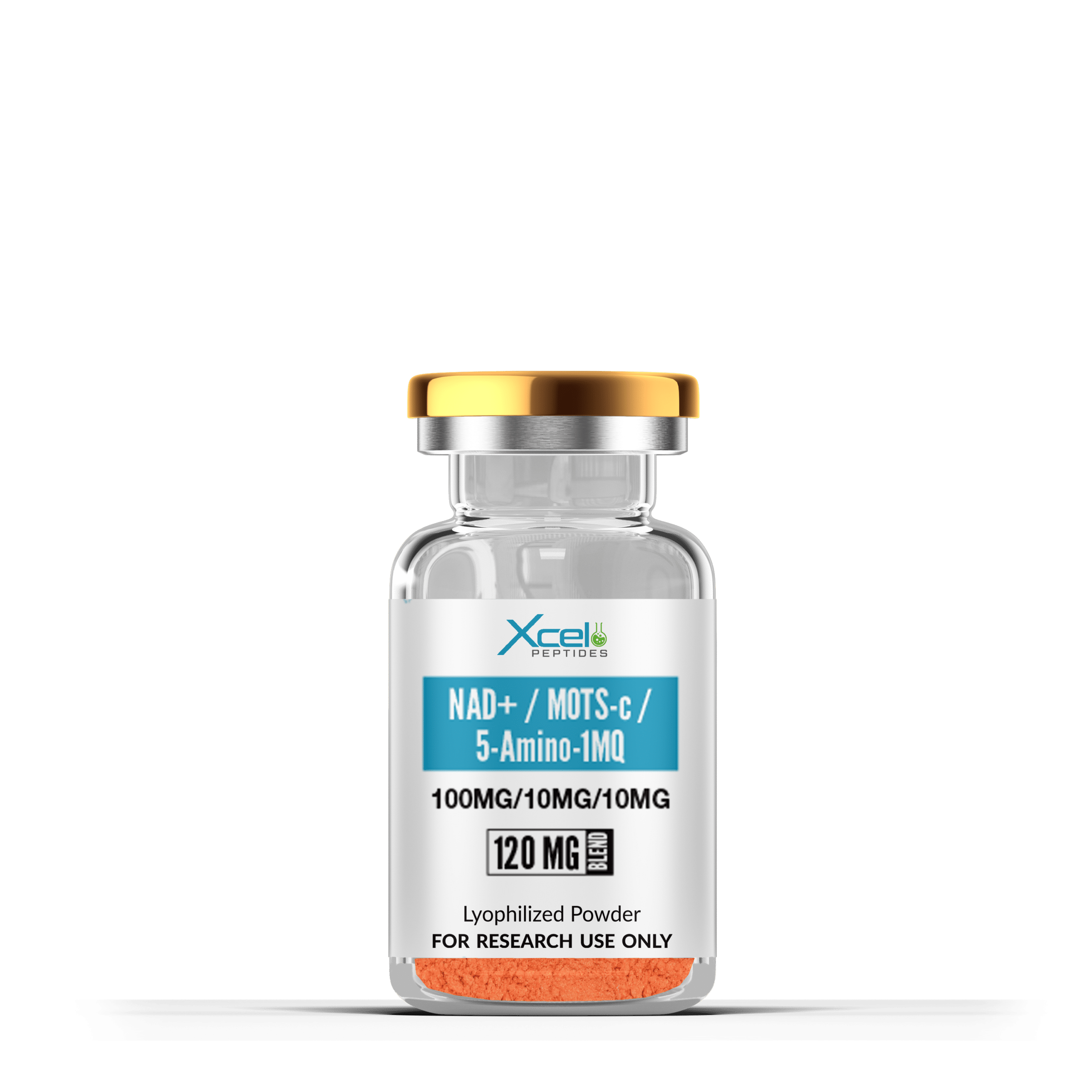
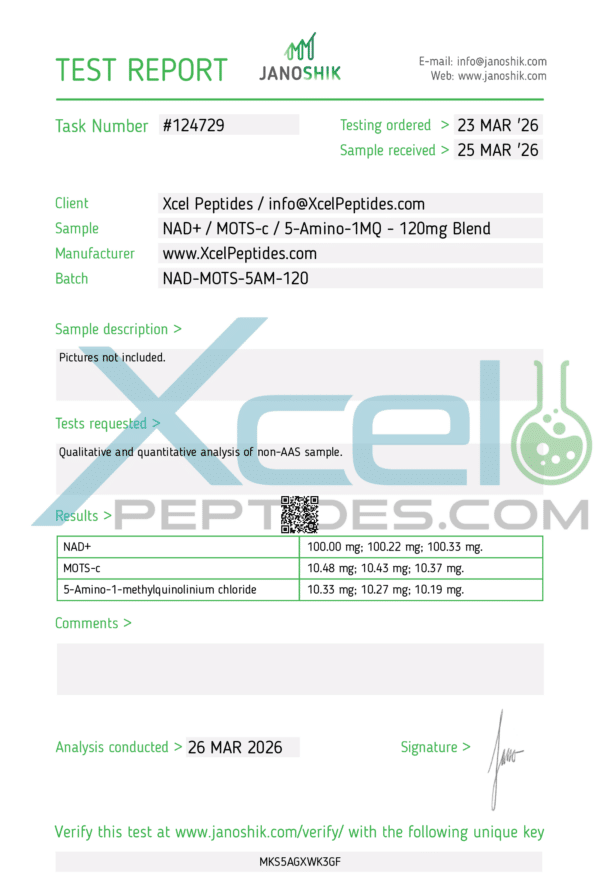
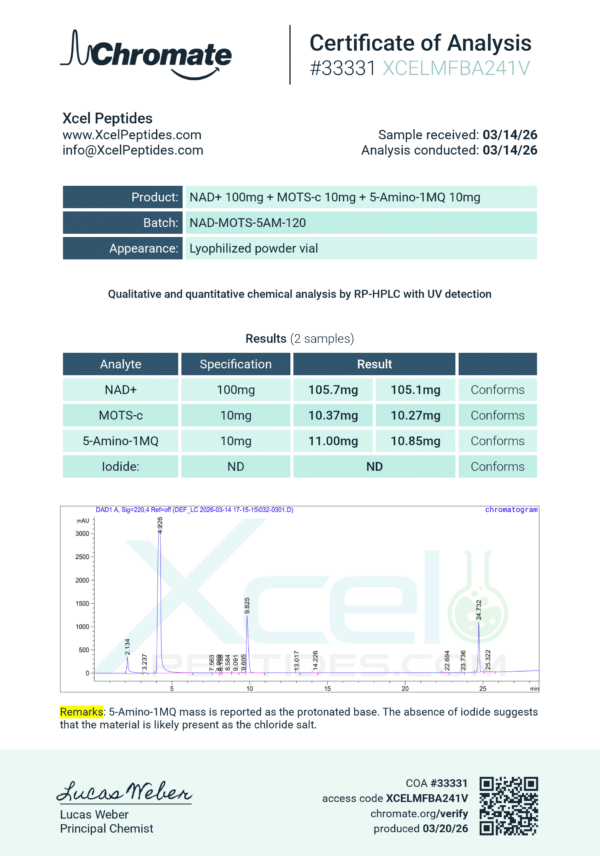
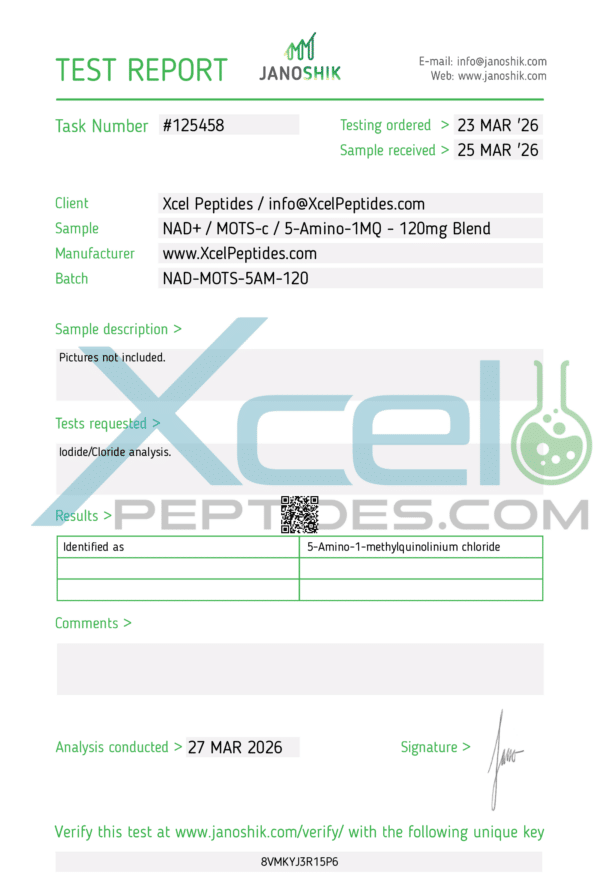
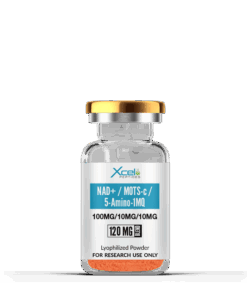
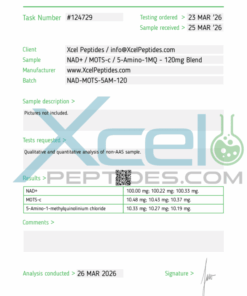
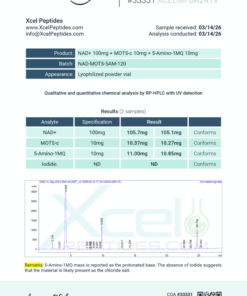
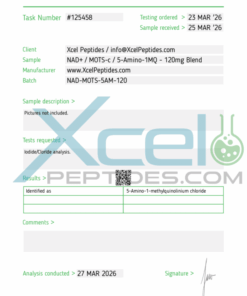
Buy NAD+ / MOTS-c / 5-Amino-1MQ Blend | NAD+ / MOTS-c / 5-Amino-1MQ Blend for sale | NAD+ / MOTS-c / 5-Amino-1MQ Blend delivery
NAD⁺ / MOTS-c / 5-Amino-1MQ Multi-Compound Laboratory Research Formula
This multi-compound research panel combines Nicotinamide Adenine Dinucleotide (NAD⁺), the mitochondrial-encoded peptide MOTS-c, and the small-molecule compound 5-Amino-1MQ. The formulation is intended strictly for laboratory investigation involving controlled experimental systems and non-human test subjects, where it may be used to examine cellular signaling networks, metabolic pathway regulation, and mitochondrial-associated biochemical processes.
NAD⁺ is a widely studied redox coenzyme present in numerous biochemical pathways. In laboratory models, it functions as a central electron carrier in oxidation-reduction reactions and participates in enzymatic systems such as sirtuins and poly-ADP ribose polymerases (PARPs). These systems are frequently evaluated in studies exploring cellular energy transfer, redox chemistry, and nucleotide-dependent enzymatic activity.
Order NAD+ / MOTS-c / 5-Amino-1MQ Blend | Best NAD+ / MOTS-c / 5-Amino-1MQ Blend lab tested | Quality NAD+ / MOTS-c / 5-Amino-1MQ Blend online
MOTS-c (Mitochondrial Open Reading Frame of the 12S rRNA-type peptide-c) is a short mitochondrial-derived peptide encoded within mitochondrial DNA. Experimental literature describes MOTS-c as a signaling peptide capable of translocating to the nucleus under certain cellular conditions in laboratory models. Research protocols commonly evaluate this peptide in relation to mitochondrial-to-nuclear communication pathways, metabolic signaling networks, and stress-response gene expression in experimental organisms.
5-Amino-1MQ (5-Amino-1-methylquinolinium) is a small-molecule compound frequently referenced in studies examining nicotinamide N-methyltransferase (NNMT) enzyme systems. In laboratory research environments, NNMT-related pathways are often investigated for their role in cellular methylation chemistry, nicotinamide metabolism, and intracellular metabolite flux.
When combined in controlled research settings, these compounds allow investigators to explore interactions among mitochondrial peptides, nucleotide cofactor systems, and nicotinamide-related enzymatic pathways. The panel may support experimental designs focused on cellular bioenergetics, transcriptional signaling, and metabolic regulation mechanisms within non-human experimental models.
Summary of Characteristics
| Characteristic | NAD⁺ | MOTS-c | 5-Amino-1MQ |
|---|---|---|---|
| Chemical sequence of amino acids | N/A (nucleotide coenzyme) | MRWQEMGYIFYPRKLR | N/A (small molecule compound) |
| CAS number | 53-84-9 | 1627580-64-6 | 42464-96-0 |
| Molecular Formula | C21H27N7O14P2 | C101H152N28O22S2 | C10H10N2 |
| Molecular Weight | 663.43 g/mol | ~2174.6 g/mol | ~159.21 g/mol |
| Other Known Titles | Nicotinamide Adenine Dinucleotide (oxidized form), β-NAD⁺ | Mitochondrial Open Reading Frame of the 12S rRNA-type peptide-c | 5-Amino-1-methylquinolinium, 5-Amino-1MQ chloride |
Be the first to review “Buy NAD+ / MOTS-c / 5-Amino-1MQ Blend”
Related products
Buy peptides Blends
Reviews
There are no reviews yet.